Showing posts with label book review. Show all posts

Blood and Circumstance - A Review

       I don't plan to make a habit of reviewing a lot of fiction here, but I'm taking a workshop on the Art of Book Reviewing, so I thought I'd post my first homework assignment. The requirement was to choose a book you wanted to rave about, so here's my review of Blood and Circumstance.


On the surface, the Mark Twain quote I didn't have time to write a short letter, so I wrote a long one instead may seem contradictory, but illustrates the truth that a short, tight book is much harder to write than a long, rambling book. Frank Turner Hollon writes short, tight books that rarely exceed 200 pages. I've been reading and enjoying his books for a while now, but for me, they've always been read-'em-once-and-they're-gone books, so I was in no way prepared for Blood and Circumstance.  


Blood and Circumstance is told primarily through the interviews between Joel Stabler and the psychiatrist Dr. Ellis Andrews who is there to determine if Joel is mentally competent to stand trial for the first degree murder of his brother. In Joel's eyes, it was a mercy killing because his mentally unstable brother was tormented enough to want to end his misery but didn't have the emotional strength to pull the trigger, so Joel did it for him. Through their interviews, Dr. Andrews learns that insanity is heredity in Joel's family. Joel tells of spending his childhood, watching his father's descent into madness and slowly reveals his own fears that he has begun to fall into that dark pit himself. Dr. Andrews is impressed with Joel's intelligence and it becomes obvious that Joel is to some degree manipulating the interviews, but there are intense moments when one can't doubt the sincerity of his responses as he learns things about himself and his family that he didn't know.


This is exactly the sort of psychological character study that enthralls me with its complex characters in the pressure cooker of high stakes and I'd have been happy wherever it took me, and still, at the end, I was unprepared for the final twist in the story that turns everything on its head, eliciting a gasp as it makes you wonder what is real and what isn't. In the same way I was compelled to watch The Sixth Sense a second time, I had to re-read Blood and Circumstance from the beginning, looking for clues to determine the truth. You know that picture where, when you focus one way, you see a young girl, then you look again and it's an old woman? That's what the twist did; it changed everything I thought I understood about the story. Was the truth what I thought before the twist or was that all a lie? The young girl or the old woman?


The reread is where the real test lies, because it's in the second read, knowing what you then know, that you see if all the facts fit the second possible truth or if this is just a slight-of-hand by the author? Having read it twice (and keeping score on a notepad), I can tell you that Hollon didn't cheat anywhere in the story. Both endings are possible but mutually exclusive, and the truth hides behind the choice you make about which character you're going to believe. As much as ambiguous endings normally bother me, I realized it also allows me to choose the ending my heart wants, and so the story satisfies, which is what I wanted from the beginning. It's what I always want. And Frank Turner Hollon does it all in only 170 pages.
======================================================
If you were choosing a book to rave about, what would it be?

Book Review: Front Page Affair by Mira Lyn Kelly

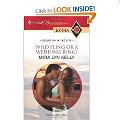
Mira Lyn Kelly caught my attention when I read the review at Dear Author for her first book Wild Fling or Wedding Ring (yes, I know. Terrible title.) It became one of my favorite books of the year, so I was delighted to lay my hands on her second book, Front Page Affair.

Ms. Kelly's strength is in pulling me emotionally through the story. Her characters can do a complete 180 emotional reversal, but the author never lets go of the reader's hand, never asks her to cover her eyes and pretend she "didn't see that."

Too often, that's precisely what other authors do. And I, like Dorothy in the Emerald City, am unable to ignore the author behind the curtain who is attempting to manipulate my emotions.

The sin of course isn't in manipulating my emotions. After all, that's precisely what I want from a book. The sin is in letting me see it. That just doesn't happen with Ms. Kelly. When Payton (the heroine) hopes that Nate (the hero) loves her, I'm there. And near the end of the book, when she give up that hope, practically between one heartbeat and the next, I make that transition with her, because Ms. Kelly understands how that change happens inside the heart, and she finds just the right words, not just to show that change in the heroine, but to make me feel it as well. And I find myself so skillfully manipulated that I want to beg for more.

With all this raving, one might get the idea that I think the book is perfect. It's not. A long-standing animosity between Nate and Payton's brother that dates back to high school provides the initial story complication. Ms. Kelly takes her time revealing the details of the falling out between the two men, which may be why I didn't really zero in on my difficulty with this part of the story until after I'd finished the book. My first impression was that they had been friends, but later it seemed that they'd associated more because they needed something from each other. It's a false step in  my eyes, because I can't reconcile the way Payton and Nate remember their past association when it hinges on his relationship with her brother which wasn't that of a friend.

Later still, when Payton's brother learned that she is seeing Nate, I expected him to create another obstacle for their relationship. Indeed, I felt this was an implied promise. Instead, he was the catalyst for one of the emotional changes mentioned above. As I was reading the story, I was caught up enough in the heroine's emotions that I accepted this, but on a subliminal level, it tugged at me. Not enough to do serious damage to the story, and my faith in the author is strong enough to believe that, had the story been just a bit longer (the publisher's length requirement may account for this) she would have addressed this with the same skill she displayed in the rest of the story. I do know that this flaw wasn't enough to stop my heart from crying "Nooooo! I want more!" as I approached the last few pages of the book.

And that's what really counts in the end, that Nate and Payton's emotions ring true. Using that yardstick, what the book delivers can only be expressed with a deep sigh of satisfaction on the last page.

I'm not sure how I'm going to amuse myself while I wait for the next one of Ms. Kelly's books to be released, but you can bet I'll have it preordered.

GMC: Goal Motivation & Conflict by Debra Dixon: A Review

Once you've been around the writing scene for a while, you know that there's hundreds of middle of the road books about writing that don't offer anything new, but sometimes new information isn't what you need. You need something that helps you grapple with the principles you already know. A new way to see story elements that's going to click with the way your mind works. This is one of those extraordinary books that does that.

In a recent story I wrote, my hero and heroine started life with full-blown goals, motivations, and conflicts. I knew exactly what each of them wanted from page one, why they wanted it, and what stood in their way. It was a gift from the gods. All I had to do was stand back and watch them fight for what they wanted. *sigh* If only all characters came so fully equipped.

Most of the time you have to equip your characters yourself. How to do that is the main thrust of GMC. Even if you already know that your characters must want something (goal) and you know why they want it (motivation) and why they can't have it (conflict), this book is still worth having in your library.

One of the reasons is because, if you're anything like me, you sometimes confuse the elements. And it's easy to do. If you'd asked me before I read this what my heroine's goal was in the story I channeled, I'd have said, "to have a family of her own" but that's actually her motivation.
GMC provides a formula to encompass the three elements. That formula comes down to 3 words: want, because, but.

The little girl wants ice cream because all the other children at her birthday party are having ice cream but she's lactose intolerant.

And there you have it. Goal, motivation, and conflict. Interestingly enough, this formula comes in handy when you need to pitch your story.

But it's not always that easy for me. One of the examples Dixon uses extensively in GMC is Casablanca. In the beginning of the movie, Rick's goal is to keep the bar open, but what's the motivation? Initially, I drew a blank because, for me, the fact that he needs money is so basic and so universal that I skate right over it. It's a "duh" motivation. But apparently, "duh" motivations are valid. My guess is, however, that if you have a "duh" motivation, your either going to need interesting goals and conflicts or have additional goals for the character to keep the reader engaged.

While identifying the GMC is the books main thrust, Dixon touches on other things: black moments, showing vs. telling, viewpoint, dominant impressions, urgency, and query writing because these things tie to GMC. She handles each subject with the clarity that has made so many aspiring writers find a permanent place on their bookshelf for this book.

What revelations have you found in writing books, magazines, or websites? Which resources do you recommend to others?

If you'd like to see reviews of other writing sources, go here.  

Best Books of the Year

As the year draws to a close, it's only natural to reflect on what the year brought into your life. Books are always a big part of that for me. I find new books (or at least new to me) by browsing bookstores (online and mortar) or by word of mouth. Sometimes I take a risk based on an online review. That's getting more common for me. Since I thought it might be for you as well, I decided to share the ups and downs of my year and invite you to do the same. 

What was the best book you read this year? The best new author you discovered? The most astounding non-fiction? The biggest disappointment? Don't limit yourself to one per category. I know that sometimes it's impossible to choose just one and I won't make you.
Here's my choices. Maybe you'll find something you just have to read.


The Best Book:
The Hunger Games by Suzanne Collins
Wild Fling or Wedding Ring by Mira Lyn Kelly

Honorable Mention:
All Larry Brooks' back list. He's like a darker, more twisted version of Harlan Coben.

Blood and Circumstance by Frank Turner Hollon. He always amazes me because he writes such tight stories in like 200 pages and this is no different, except he completely blew my mind with this. Ambiguous endings don't usually make me happy, but this one just made me reread the story, trying to build a case for the ending my heart wanted.

Sugar Creek by Toni Blake. What can I say? She's one of my favorite authors.


Non-Fiction
Highway to Hell - John Geddes. Written by an ex-SAS officer who is boots-on-the-ground in Iraq. Timely and informative.

The Quest for Cosmic Justice by Thomas Sowell. I "discovered" Thomas Sowell because, well, frankly, I'm an economics junky. But he's written on so many subjects that one has to classify him a true renaissance man. Clear thinking and wise.


Reaper's Line:Life and Death on the Mexican Border by Lee Morgan. Another timely book. Written by an ex-border patrol officer, this illuminates a lot of what's really going on at our southern border.

And for me, there's always a special category labeled "Writing Books."


Most Disappointing:
The Lost Symbol by Dan Brown. I don't think I need to elaborate  about this choice.

The Dust of 100 Dogs by A.S. King. I'm not very forgiving when an author takes the easy way out and gives the character an "I'm TSTL" moment to make the plot work out. What else can you call it when a "retiring" pirate strips her ship of all it's weapons while still sailing the waters where she plied her trade? Something bad then proceeded to happen. Uh, gee. Ya think? (Gotta wonder—didn't her editor notice either?)

So here's my favorite part. Share your favorites with me (or your disappointments.) What did I miss that I absolutely should read?